

Photography allows people to capture moments that might otherwise disappear in an instant. Beyond artistic expression, photographs can serve as valuable tools for observing nature, documenting changes, and communicating scientific information.
From wildlife photography to microscopic imaging, cameras provide different ways of examining the world around us.
Photography as Scientific Observation
See how:
Capturing Wildlife
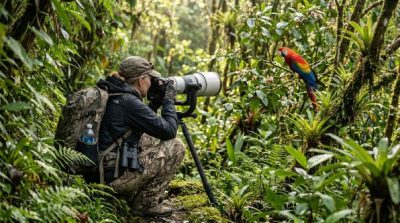 Wildlife photographers often spend considerable time observing animals in their natural environments. Photographs can document behavior, movement, feeding patterns, and interactions between species. When collected systematically, visual records can contribute useful information about animals and ecosystems.
Documenting Environmental Change
Photographs can also show how landscapes change over time. Images of forests, coastlines, rivers, glaciers, and urban areas can provide visual records that allow people to compare conditions across different periods. This can make gradual environmental changes easier for the public to recognize.
Photography and Technology
Check these out:
Macro Photography
Macro photography allows photographers to capture small subjects in great detail. Insects, plants, textures, and other tiny features can appear very different when viewed through a close-up lens.
Microscopic Imaging
Specialized imaging equipment can go beyond ordinary photography by capturing structures that cannot be seen with the naked eye. Microscopic images are widely used in scientific research and education.
The Importance of Accurate Documentation
A photograph provides a visual record, but it still needs context. Information about when, where, and how an image was captured can be important when photographs are used for scientific or educational purposes.
Editing can also influence how an image appears, so scientific photography should be handled carefully when accuracy is important.
Conclusion
Photography is more than a creative medium. It can help people observe wildlife, document environmental changes, and visualize subjects that are difficult to see with the naked eye. By combining photographic skills with careful observation and accurate documentation, photographers can contribute to a deeper understanding of the natural world.