
Capturing Jeju’s Nightlife: A Visual Journey Through Room Salons and Private Lounges
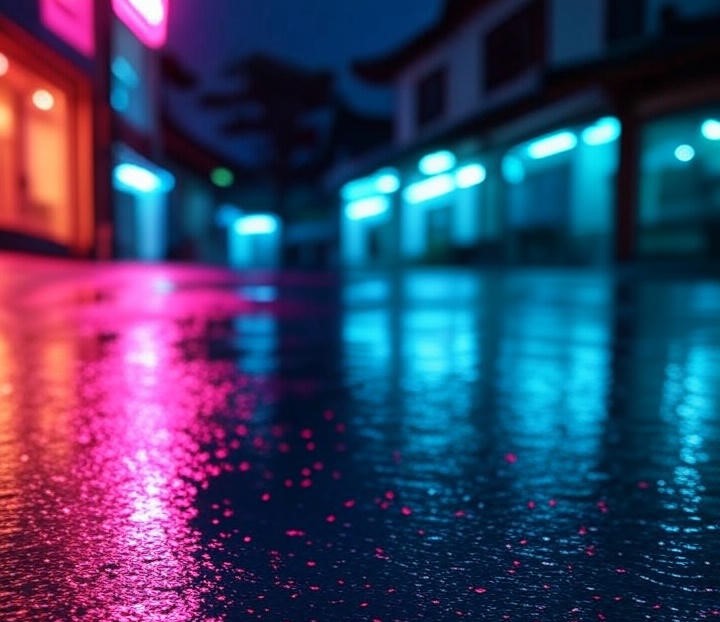
neon reflections in a rain puddle

Jeju Island pulses with a vibrant nightlife that photographers find irresistible. The island’s after-dark scene, with its neon-lit streets and exclusive private lounges, offers a canvas for capturing stunning visuals. From the glowing signs of bustling entertainment districts to the intimate ambiance of luxury healing rooms, Jeju’s nightlife is a blend of energy and mystery. Photographers face the challenge of documenting this world while respecting its private nature. This article explores the art of photographing Jeju’s nightlife, offering practical tips for low-light photography and insights into capturing its hidden charm.

The streets of Jeju come alive at night with a kaleidoscope of colors. Neon signs flicker, casting vibrant hues across the pavement, while the hum of music spills from exclusive venues like Jeju Room Salons (제주 룸싸롱). These private lounges, tucked away from the main thoroughfares, are a hallmark of Jeju’s upscale entertainment culture. Photographers drawn to these scenes must navigate the balance between capturing the atmosphere and respecting the privacy of patrons. The key is to focus on the external allure—snapshots of glowing signs, reflections in glass, or silhouettes framed by softly lit entrances.

Mastering Low-Light Photography

“Jeju’s nightlife is like painting with light—you have to feel the rhythm of the night to capture its soul.”

Low-light conditions define nightlife photography. Jeju’s dimly lit streets and lounges demand technical skill to produce clear, evocative images. A camera with a high ISO range is essential for shooting in dark environments without excessive noise. Wide-aperture lenses, like f/1.4 or f/2.8, allow more light to reach the sensor, creating sharp images with a shallow depth of field. Tripods can stabilize long-exposure shots, capturing the motion of crowds or the blur of neon lights. Experimenting with manual settings helps photographers adapt to the unpredictable lighting of nightlife scenes.

Why settle for flat images when you can add drama? Low-light photography thrives on contrast. Use the interplay of light and shadow to create mood. For example, a neon sign’s glow against a dark alley can evoke mystery. Adjust white balance to preserve the warmth of ambient lights without distorting colors. Photographers often underexpose slightly to enhance the vibrancy of neon hues, making the scene pop. As one local photographer put it, “Jeju’s nightlife is like painting with light—you have to feel the rhythm of the night to capture its soul.”

Respecting Privacy in Exclusive Spaces

Jeju’s private lounges are intimate by design. These spaces, including the famed Jeju Room Salons 제주 룸싸롱, cater to discreet clientele seeking luxury and relaxation. Photographing these venues requires sensitivity. Always seek permission before shooting inside private establishments. Focus on architectural details, ornate doorways, plush interiors, or elegant glassware, rather than individuals. If patrons appear in the frame, ensure their faces are blurred or obscured to maintain anonymity. This approach respects privacy while still conveying the venue’s allure.

Building trust is key to accessing these spaces. Many photographers collaborate with venue owners to arrange shoots during off-hours. This allows for creative freedom without intruding on guests. Some use candid street photography techniques outside, capturing the energy of people entering or leaving without revealing identities. Others rely on long lenses to shoot from a distance, preserving the mystique of these exclusive spots. By prioritizing ethics, photographers can document Jeju’s nightlife authentically.

Tips for Capturing the Essence of Jeju’s Nightlife

Every great photo tells a story. To capture Jeju’s nightlife, focus on elements that define its character. Here are some practical tips:

  • Scout locations early. Visit entertainment districts during the day to plan your shots.
  • Use reflections creatively. Puddles, glass, or mirrors can add depth to your images.
  • Experiment with motion. Slow shutter speeds capture the blur of passing crowds, adding energy.
  • Embrace color. Neon lights are the heartbeat of Jeju’s nights, let them dominate your palette.
  • Stay discreet. Use small, mirrorless cameras to blend into the crowd and avoid drawing attention.

The Cultural Context of Jeju’s Nightlife

Jeju’s nightlife reflects its unique blend of tradition and modernity. Room salons and healing lounges are more than just entertainment venues; they’re cultural hubs where locals and visitors connect. Photographers must understand this context to create meaningful images. Avoid stereotypes or sensationalism. Instead, aim to capture the warmth and camaraderie of these spaces. A well-composed shot of a glowing lounge entrance can convey sophistication without exploiting its private nature.

What makes Jeju’s nightlife so photogenic? It’s the contrast between the island’s serene daytime beauty and its electric after-dark energy. Photographers who embrace this duality create images that resonate. Whether it’s the flicker of a neon sign or the soft glow of a private lounge, each frame tells a story of a hidden world. As one photographer noted, “Jeju at night feels like a secret you’re invited to share, but only if you tread lightly.”

READ ALSO: Photography as an Art Form: Preserving Timeless Moments

Conclusion

Photographing Jeju’s nightlife is a journey of light, color, and respect. The island’s entertainment scene, from neon-lit streets to exclusive Jeju Room Salons, offers endless inspiration for photographers. By mastering low-light techniques and prioritizing privacy, you can capture the essence of this vibrant world. Each image becomes a window into Jeju’s nocturnal charm, inviting viewers to see the island in a new light. So grab your camera, step into the night, and let Jeju’s after-dark magic guide your lens.
Advice for New Photographers in the Year 2023

Quick and simple advice on photography basics, including composition, creativity, and more. You may expect them to be of great use to you while you study photography.

Practical Advice for New Photographers

Focus on Your Structure

Taking interesting photographs requires you to be actively involved in the process. Don’t coast along without doing anything. In its place, you should give some attention to your composition in order to produce the best images you can.

Highlights Should Not be Overexposed

Overexposing highlights together in the shot is a common mistake when choosing camera settings. Reason why? There’s no way to get any information back from a photo’s white portions.

Have Patience

If you aren’t cautious, you may easily mess up a picture shoot. While learning photography, taking your time and relaxing is essential.

Recognize the Need for a Flash

The use of flashes is not limited to low-light conditions. Don’t get me wrong, they’re fantastic for providing supplementary illumination. You need to utilize an external flash, point it up, and use a long lens to get the best results (50mm or longer). Photos from this event will blow everyone’s mind. It’s the simplest approach to get outcomes when you don’t have much expertise.

Useful Indoor Photography Tips

Concentrate on Little Details

Photographs taken indoors might appear incredibly plain, especially if the location is deserted or vacant. You may compensate for this by using eye-catching components in your compositions and making sure you don’t have Missing shingles on roof.

A large portion of us lack studios. Nevertheless, using items you see every day, you may make your own. Look for colorful items that you may use as subjects, foregrounds, or backdrops in your photographs.

Consider your environment. What do you often consider a given? Could you include that object in a picture?

Whenever possible, use artificial light inside.

What kind of lighting is ideal for indoor photography? A lot of photographers agree that natural lighting is best.

Yet, I assert that you may achieve excellent outcomes with any interior illumination you have!

My favorite portraits are the results of my little artificial light experiments.

Understand the ideal times of day for indoor shooting

Indoor settings have relatively little natural light. Shoot during these times of day if you want the most light possible inside:

Midday: Photos taken outside at this time tend to be quite harsh and unattractive. Yet, indoors, the noon light looks amazing. Get the most flattering photos by positioning your subject in front of a curtained window.
You may already be aware of the enchantment of the “golden hour.” That is just before sunrise and just after sundown. Every type of photography benefits from the diffused light.
Twilight: The sky becomes pink just after sunset. When coupled with artificial lighting, this might make the ideal setting for enigmatic silhouettes.

Maximize the Use of Each Room

Every space has its own charm. An empty room’s white walls might serve as the background for traditional portraits or still life paintings. Your subject’s personality may be reflected in the state of the environment. It might serve as the topic or just a splash of color in your background.

Produce Your Own Resources for Indoor Photography

Your closest pals should be DIY projects. These projects are not only enjoyable but also incredibly practical and cost-effective. You need to experiment with them if you want to advance your interior photography.


Life Path and Personality Numbers : What’s Their Significance in Numerology

In numerology, your birth date can show you your Life Path Number, which serves as your guide toward a career that has the highest potential to bring success.

If you are someone like Bill Gates whose birth date is October 28, 1955 (10 + 10 + 20 = 40 or 4 + 0 = 4, your Life Path resonates with the vibrations of the Number 4. That particular number stirs initiating the building of a solid foundation for a project to achieve stability, but with the application of talent, hard work, determination and endurance to attain progress.

What Does a Life Path Number Denote

The Life Path Number is akin to the Sun Sign of astrology, which gives insight about a person’s talents, ambitions, strengths and weaknesses. It directs a person toward a path of experiences and events that influenced the past. The past can continue to affect the present and the future unless an alternative path is taken.

While the Life Path Number points you to a career or job direction, it’s not a guarantee that you will achieve success in the future.

Importance of Personality Traits


Personality Number that represents your set of Personality Traits while working on a Life Path can be best explained by way of example. Our Personality Traits can increase our chances of attaining future success.

How does the Personality Trait of William Henry Gates III fit into his Life Destiny 4? To calculate Bill Gates’ Personality Trait Number, we use all the consonants of his name WLLMHNRYGTS – and then transpose them into the Pythagorean Numbers 5 + 3 + 3 + 4 + 9 + 5 + 9 + 7 = 45
Gates’ Personality Trait is 4 + 5 = 9

Apparently, Personality Trait 9 is the perfect set of traits for someone like Bill Gates, an introvert who would rather spend time working on PC software than spend time in college classrooms. The success of the Microsoft Company that he founded with a friend, earned him the topmost spot of being the World’s Richest Man for 18 years. That was before Amazon’s Jeff Bezos, and recently Elon Musk, became successors to the title.

Paying Attention to Angel Numbers

The vibrations and representations of numbers linked to a person is just one of the aspects of the practice of numerology. When in pursuit of progress toward the fulfillment of an ambition or successful completion of a project, a person should also take notice of Angel Numbers that repeatedly appear in relation to circumstances associated with one’s undertakings.

Angel Numbers are explained as the means by which we receive guidance from astral forces who can simply be called angels. The 747 Angel Number for one is said to be a message conveying approval of the way a person is currently working on his goals.

The appearance of 7s between a 4 is some sort of caution when dreaming of a world filled with wealth and comfort. Number 4 has vibrations that resonate with the principles of practicality and responsibility, while immersing oneself in hard work. Whether Bill Gates paid attention or heeded the 747 Angel Numbers that appeared to him is something only the Microsoft founder can answer.

A Brief Take on Roles Played by Photographers

The war in Ukraine has been dominating the news, Thanks to advancements in technology, genuine reports and not fake news are being brought to light. Unfortunately though, we are seeing countless civilians getting killed, while others have lost their homes. Millions have been fleeing and flocking to neighboring countries to avoid the blatant atrocities of Putin’s war crimes. Newsmen and photo journalists also fearlessly face the dangers alongside Ukranians defending their country. Sadly two of them have fallen and met their untimely demise. … Continue reading “A Brief Take on Roles Played by Photographers”

Exciting Simple Photo Effects: The Right Light

For beginners, here’s how special effects can be achieved quickly and easily. Your photos will be real eye-catchers.

It’s finding the right light and the perfect spot

The right light is essential for a perfect portrait photo. Because only with the right light can a certain mood be created – dramatic or light, high-contrast or moody. So start every shoot by looking for the best possible lighting conditions.

Optimal light source: daylight

Natural daylight is always my favorite light source. For a perfect beauty portrait, I recommend a well-lit place with soft light.

See places with different eyes

You can recognize such spots quickly if you look at your selected shooting location with half-closed eyes (blurred view). Or – if you can focus your lens manually – go into the blur with the focus. In this way, you can see the best spots of light directly.

The formula for a perfect portrait

3 x L is my magic formula for a perfect portrait photo – light, location, and love.

Soft Light versus Hard Light

Soft light is better than hard light for beauty portraits, as it has the same effect as a soft-focus filter: the skin appears smoother, dark circles are reduced and imperfections are concealed. Do not place the model indirect light or in direct sun.

Use a softbox to help soften the light

There are of course aids to softening the light. For example through a softbox. This is a photo accessory that is used to evenly illuminate subjects. It breaks up the light and thereby makes it softer. But you can also achieve this effect naturally – for example with clouds, which also break the sunlight. Or do you happen to have white curtains on the windows at home that let the light through? Jackpot! You can also use this as your personal softbox.

Hard light in turn gives a portrait photo more drama. When it comes to highlighting a person’s personality, you may be able to tease out certain traits with this light. To do this, place your model in direct sunlight because you can play with light and shadow.

Note: If the light is too strong, this setup can make it uncomfortable for your model and cause them to squint.

Avoid the midday sun

If you take photos outside, be sure to avoid the blazing midday sun. Because that is tough light that comes from high above. This ensures that the eyes (sockets) lack light from the front. And for me the eyes are an important factor for a beautiful portrait, after all, they are the gateway to the soul. Better: Look for partial shade – roofs, overhangs, trees, balconies or house entrances that block the light from above. Alternatively, you can just wait a little while until the sun is lower.